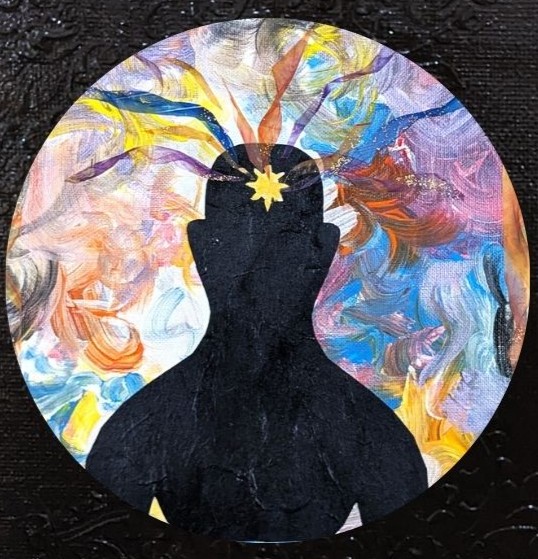
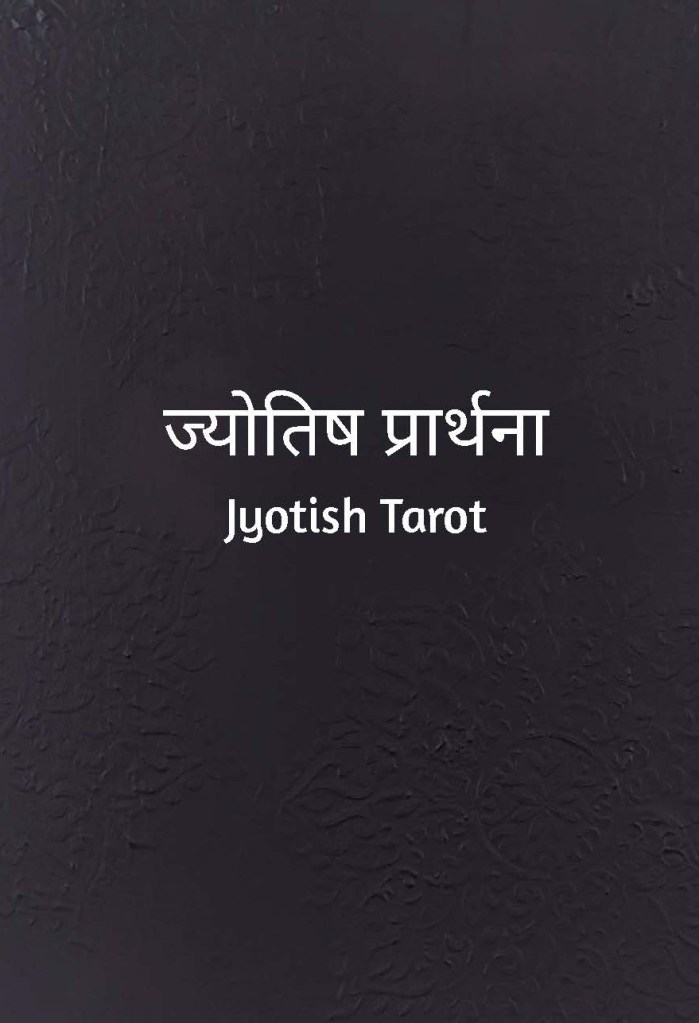
On the back of each card is this Sanskrit prayer:
ज्योतिष t प्रार्थना
“Jyotiṣa Prārthanā” translates to “prayer of Jyotish”.
At a foundational level, Sanskrit is incredibly precise. Its grammar, refined by the ancient scholar Pāṇini, is designed to preserve meaning with clarity and consistency. Each word is built from roots that carry specific ideas, allowing complex spiritual and philosophical teachings to be transmitted with very little distortion over time.
Beyond meaning, Sanskrit is also experienced through sound. It is a fully phonetic language, where each syllable is intentionally formed in the mouth, creating subtle vibrational patterns in the body. In traditional practice, these sounds are not just spoken—they are felt. This is connected to the concept of Nāda, the idea that sound itself is a fundamental creative force.
This is where Sanskrit moves into the spiritual realm. In texts like the Vedas, sound is understood as a carrier of consciousness. Mantras, for example, are not only meaningful in translation—their power is believed to lie in their vibration. Repeating them becomes a way of tuning the mind and body, aligning with deeper states of awareness, clarity, and presence.
In simple terms, Sanskrit operates on multiple levels simultaneously: it conveys meaning, generates vibration, and supports inner awareness. It is this combination that gives it a unique and enduring sense of depth.

Using Sanskrit names for the planets, houses, and signs is a deliberate choice to preserve the depth and original context of Jyotish.
Sanskrit terms carry layered meanings that don’t always translate cleanly into English. Each word holds both a literal definition and a subtle energetic or symbolic quality, which aligns closely with the intuitive nature of tarot.
It also gently invites a different kind of engagement. Rather than immediately linking a card to what someone already “knows” about astrology, the Sanskrit names create a pause—a moment of openness. This can help shift attention away from purely analytical thinking and into a more receptive, intuitive space, where insight can arise more organically.
In this way, the use of Sanskrit supports a fresh experience of the cards—one that balances understanding with direct, felt perception.
 Jyotish Tarot
Leave a comment