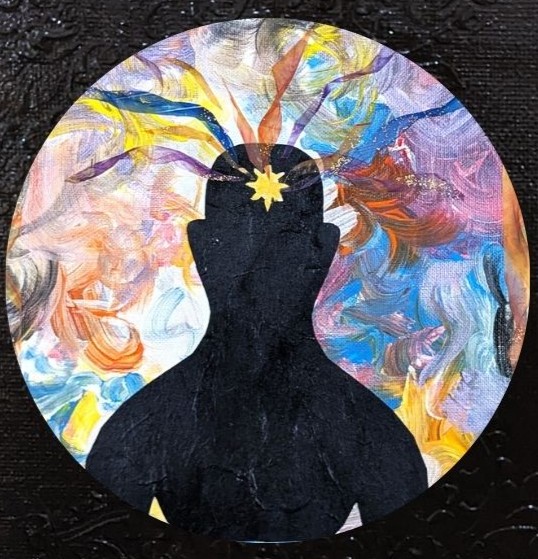
The gift of tarot or oracle cards is that we don’t need any prior knowledge of the intent of the deck itself and what it represents. One is intuitively drawn to the purpose and images of the deck. We gain insight from the card images, descriptions in the book, and the direction —upright or reversed — of the card when it is drawn. Art invokes psychological and emotional responses that are clues into the psyche.
These are examples of art pieces that showcase some of the symbolism they represent. More detailed descriptions can be found in the booklet that accompanies the tarot deck.
The Bhavas or houses: management and security
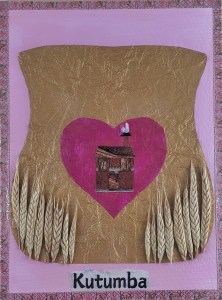
Kutumba is the 2nd Bhava (“house”). It represents the security we feel when we have wealth, as shown by the grain and the gold vase. A warm home gives us security, “home is where the heart is”. This is an Artha (“purpose”, “wealth”) house, one of the material concerns necessary for personal security. We need shelter, food, and money to buy what is necessary for health and comfort. If this card is upright, we have the inherent security in ourselves to create our lives successfully. Reversed, even with everything you “think” you want, you still feel undervalued.
The Grahas, the influence of the planets.
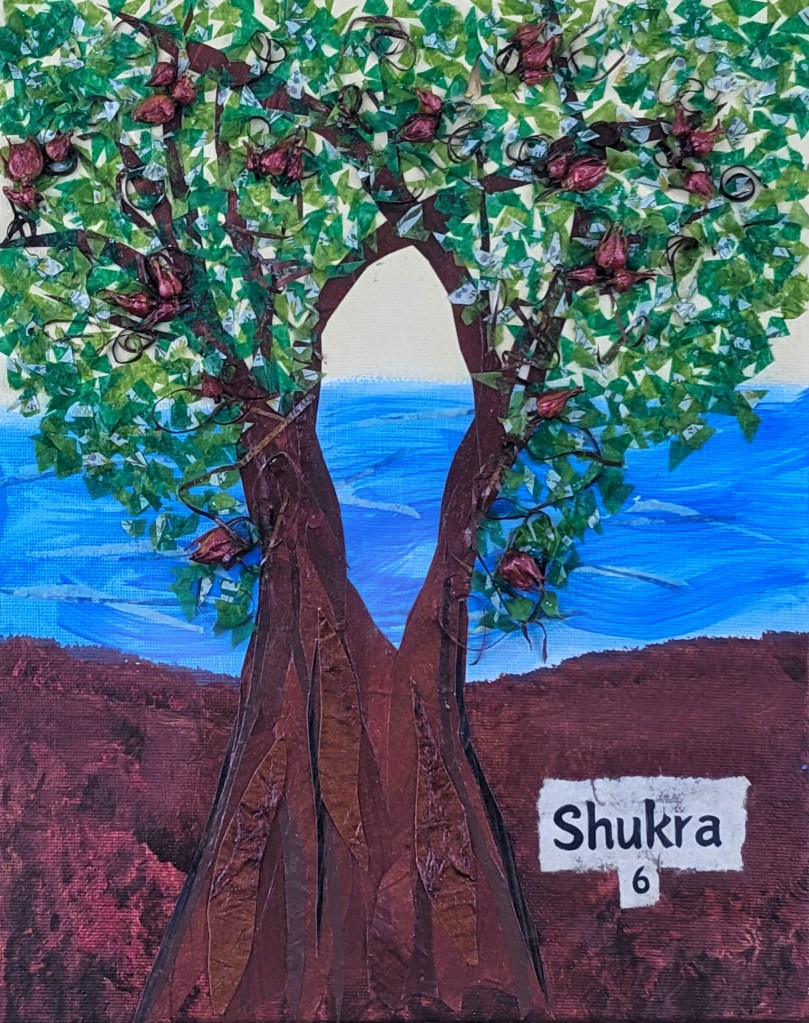
Shukra, “Venus”, is associated with the number 6, which represents balance and harmony. The Doshas (bio-energetic forces) that contribute to how the planet affects us are Vata (air element) and Kapha (earth and water elements). Venus is a diplomatic planet that has the best interests of all parties in mind when negotiating. The branches grow apart and then come back together in balance, creating a harmonious sense of poise and balance in the image. The fruit on the tree is rose buds, representing the aspect of love in relationships.
The Rashis, or signs, are collective patterns that shape our lives.

Mesa is Rashi (“sign”) number 1. This image’s background is red, symbolizing strength and passion. The flames represent the Pitta Dosha (bio-energetic force). It is a movable sign shown by the two borders on each side of the square, which represents the masculine nature. The symbol is for the Kshatriya, or “warrior” caste. There is a mist covering the bottom of the image, which represents Rajas Guna (” quality or nature” that compels one towards action and ambition).
The Nakshatras, the constellations through which the Moon travels.
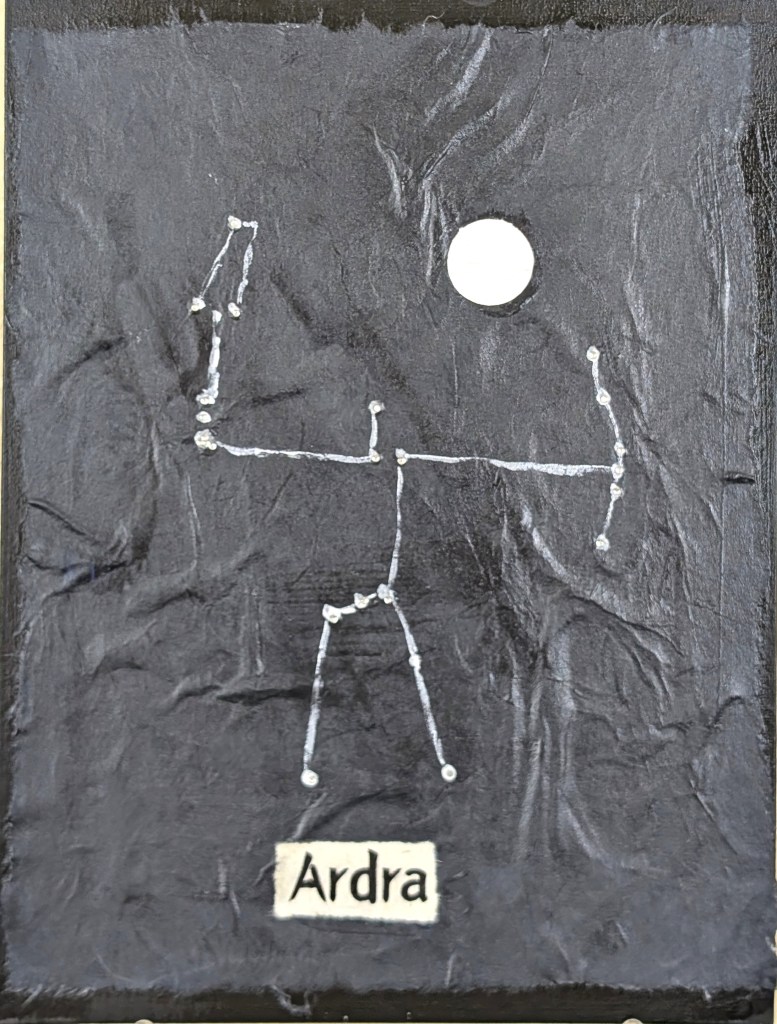
This image shows the constellation of Ardra with the Moon traveling through. This Nakshatra can suggest an early life marked by turmoil, which may have led to a pessimistic outlook on life. This persona has learned to fend for himself because he has learned not to rely on others. It can suggest a risk-taker and one drawn to unsettling aspects of nature.
The 2 nodes are Rahu and Ketu.
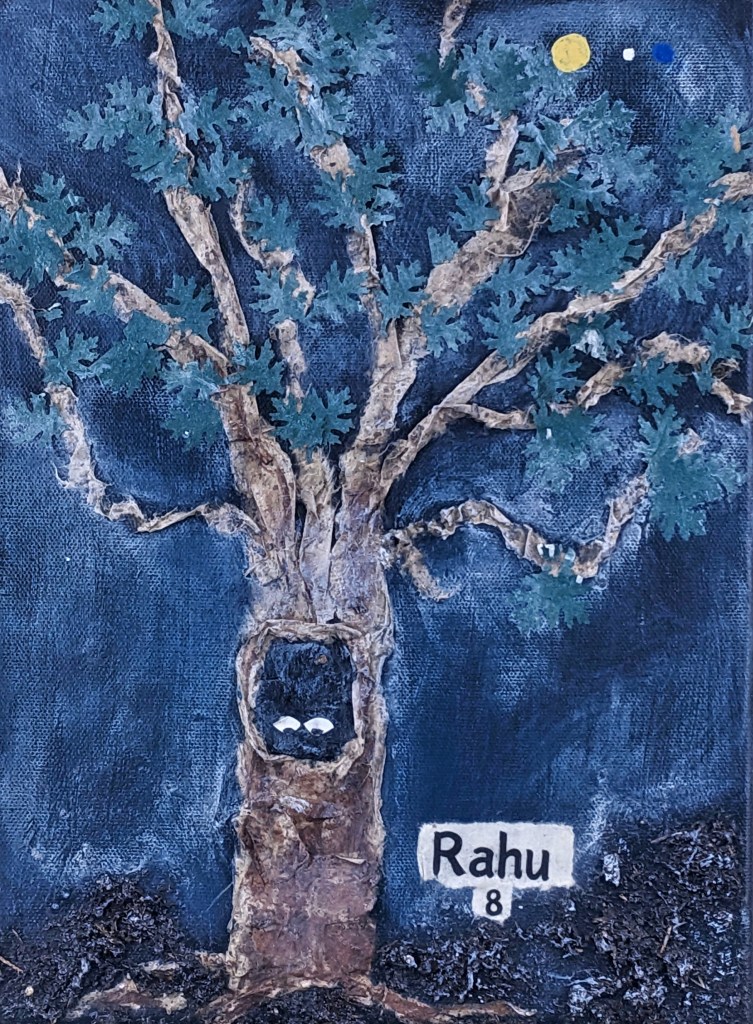
This image shows the darkness of Rahu and the hidden fears lurking in the hollow of the tree. It is covered in the mist of Rajas (illusion). In the upper right-hand corner, it shows the Moon between the Sun and the Earth, representing the solar eclipse.
The outer planets Uranus, Pluto, and Neptune.
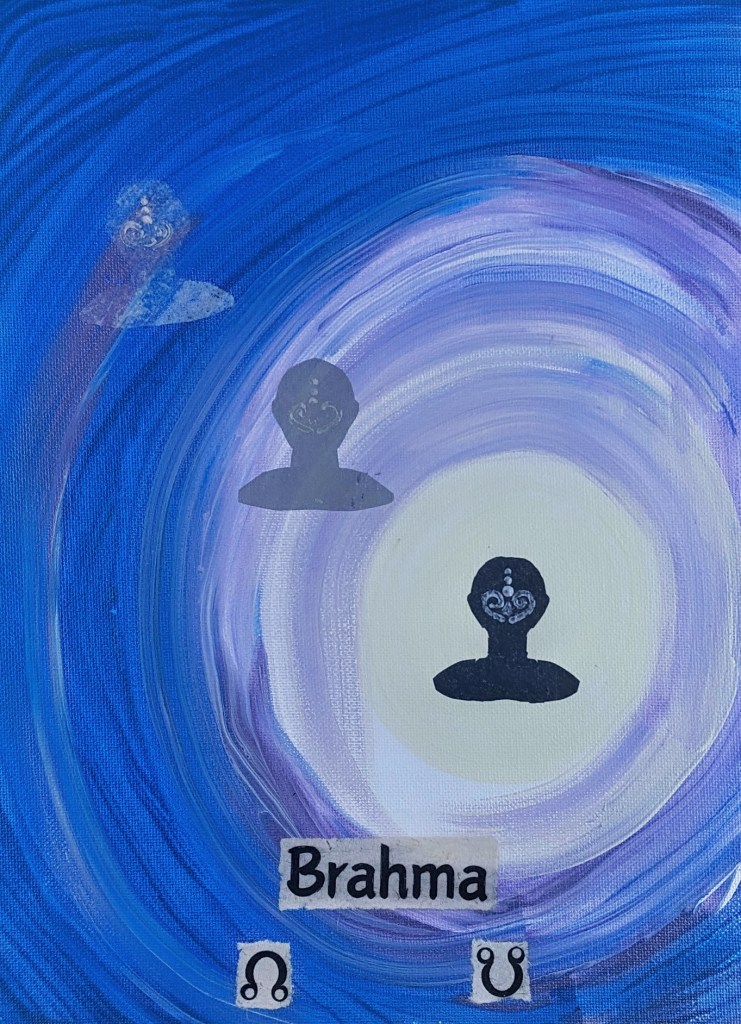
Brahma is the force that moves through Uranus. This is how we perceive ourselves, whether good or bad. It gives us the opportunity to see ourselves as a unique manifestation of God, making us better people. This image depicts the transition from a small, dark self-image to a lighter, more translucent one.
 Jyotish Tarot