The Gunas are three universal qualities that shape consciousness, behavior, perception, and experience. In Jyotish philosophy, everything in existence contains a combination of these three forces: Sattva, Rajas, and Tamas. They influence the mind, emotions, actions, desires, relationships, and even the symbolic nature of the Rāśis, Bhāvas, and Grahas within Jyotish Tarot.
Rather than being “good” or “bad,” the Gunas describe different states of energy and awareness. Learning to recognize them can deepen your understanding of both the cards and yourself.
Sattva — Clarity, Harmony, and Wisdom

Sattva is the quality of balance, purity, insight, and inner peace. It brings clarity to the mind and allows intuition to function naturally. Sattvic energy seeks truth, understanding, compassion, and spiritual growth.
When Sattva is strong, there is a feeling of calm awareness and alignment. Decisions are made with wisdom rather than impulse, and actions tend to support long-term harmony.
Cards expressing Sattvic qualities often encourage reflection, understanding, healing, patience, and spiritual connection.
Rajas — movement, desire, and activity
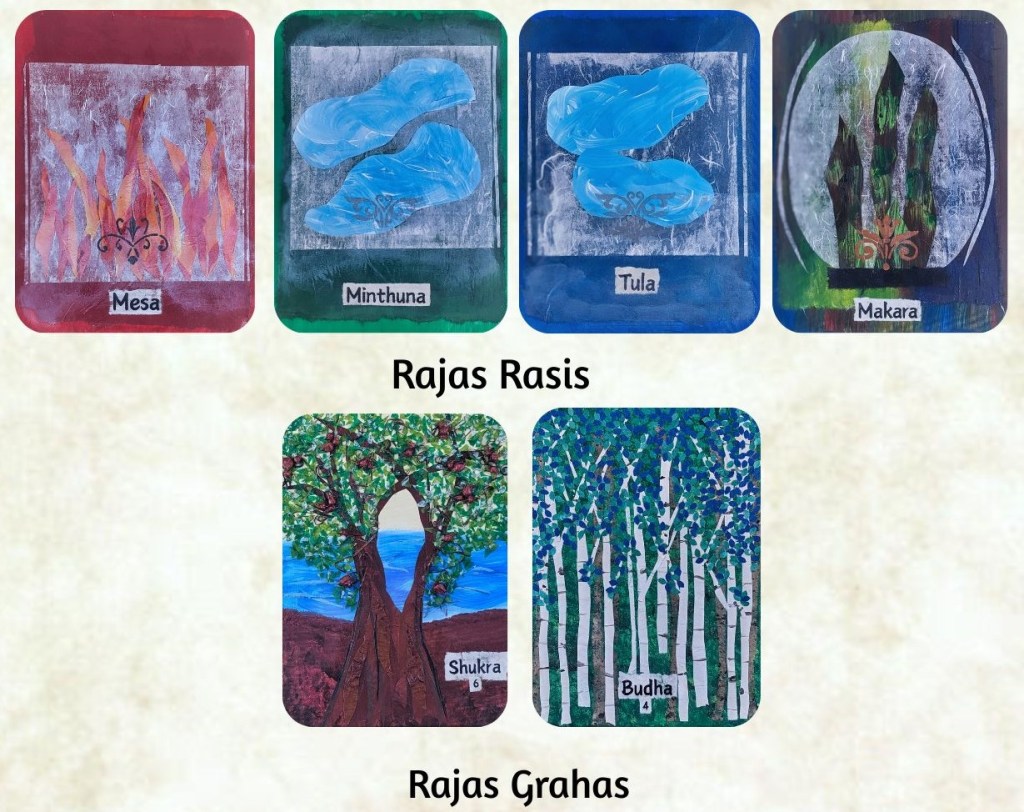
Rajas is the force of motion, ambition, passion, and external engagement. It creates activity, change, desire, and momentum. Rajasic energy pushes us toward achievement, experience, creation, and worldly involvement.
This energy can inspire growth, motivation, creativity, and leadership. However, when excessive, it may produce restlessness, emotional reactivity, attachment, or constant dissatisfaction.
Rajasic cards often reflect ambition, emotional drive, attraction, conflict, pursuit, or transformation through action.
Tamas — stability, resistance, and inertia
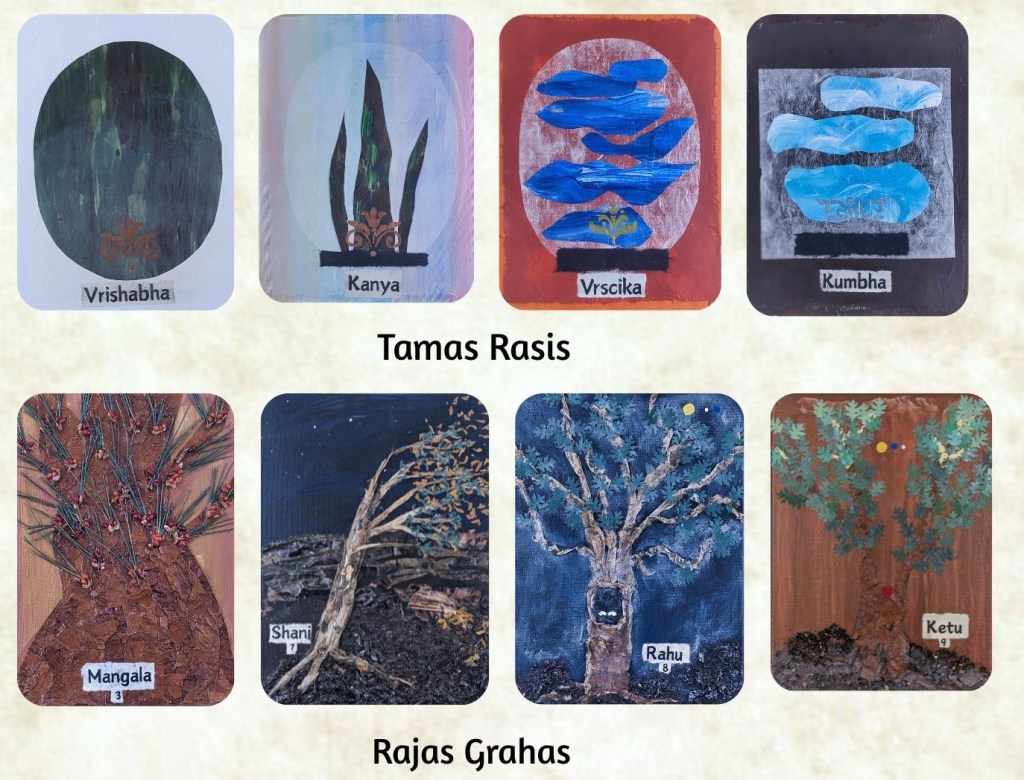
Tamas is the quality of heaviness, structure, concealment, and stillness. It grounds energy into form and provides endurance, persistence, and stability. Without Tamas, nothing could hold shape or remain anchored.
Balanced Tamasic energy supports discipline, protection, patience, and resilience. Excessive Tamas, however, may appear as stagnation, confusion, fear, avoidance, resistance, or emotional heaviness.
Tamasic cards often point toward internal processing, karmic weight, emotional protection, or lessons that require patience and self-awareness.
Bhāvas do not inherently possess guṇas because they are areas of life, not energies. Rāśis and grahas possess guṇas because they are expressions of nature itself.
The bhāvas answer the question: “Where does experience occur?”
The rāśis answer: “What is the nature of that experience?”
The grahas answer: “Who or what is acting?”
The guṇas deepen our understanding of Jyotish, revealing the underlying qualities that shape experience. By recognizing sattva, rajas, and tamas within the rāśis and grahas, we gain a clearer understanding of how these energies influence our lives and spiritual growth.
Leave a Reply